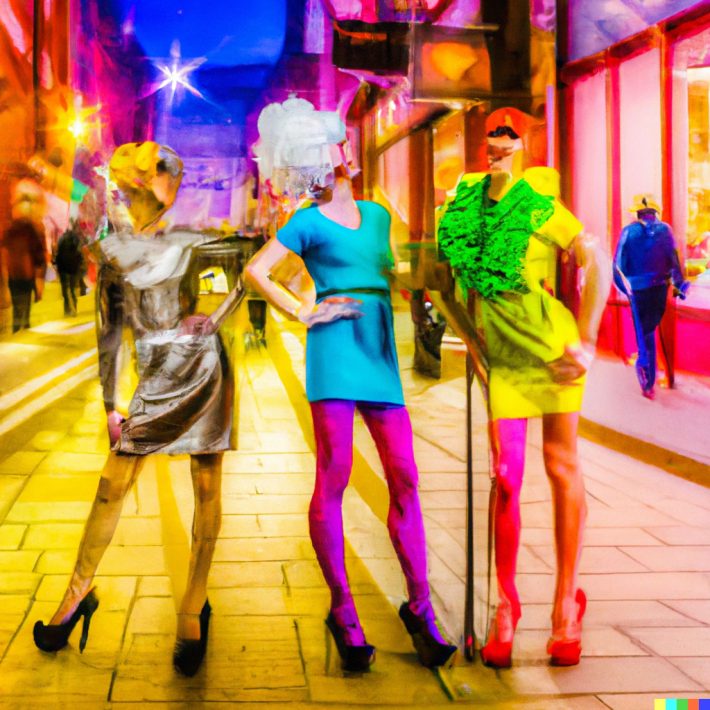
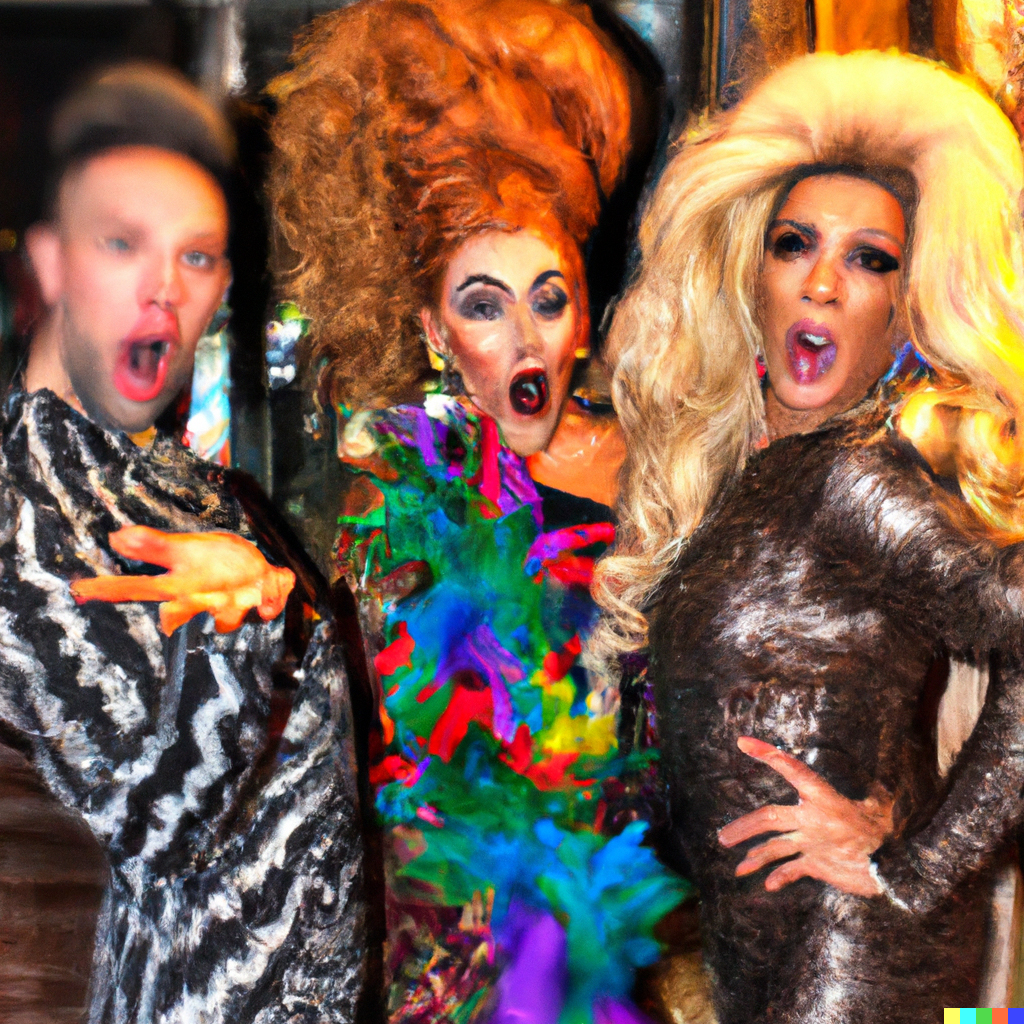
Image by Dall-E
‘In my view, drag is not an artistic issue but a social and psychological one. It is rooted in identity crisis and existential anxiety.’ Camille Paglia
‘Drag is an art form that can be used to expose the absurdity of gender roles and to challenge the patriarchal norms that dictate them.’ Germaine Greer
The machine writes…
Art Of Drag Performance
Drag performance is not just a bunch of guys in wigs and heels lip-syncing to Madonna. It is an art form that challenges the very fabric of society’s gender norms and expectations. From ancient civilizations to modern-day LGBTQ+ activism, drag has always been a form of rebellion against the status quo.
The roots of drag performance can be traced back to ancient civilizations, where gender play was used to challenge and subvert dominant power structures. The Egyptians had their male Pharaohs dress in drag to honor the goddess Isis, while the Greeks and Romans had their own versions of gender-bending performances. It wasn’t until the 20th century, however, that drag really began to take shape as a subversive art form.
In the 1960s and 70s, drag performers began to use their art to challenge the oppressive forces of heteronormativity and patriarchy. Drag queens like Divine and RuPaul were at the forefront of this movement, using their larger-than-life personas and performances to create spaces of inclusivity and acceptance for LGBTQ+ individuals.
But drag is more than just a tool of activism – it is a celebration of self-expression and creativity. Through the use of makeup, costume, and performance, drag performers create an alternate reality where anything is possible. The boundaries between male and female, queer and straight, are blurred, allowing for a celebration of diversity and difference.
Drag is not without its controversies. Some argue that drag reinforces traditional gender stereotypes, while others criticize it for its lack of diversity and inclusion. And yes, drag has been co-opted by mainstream culture, watered down and commodified for mass consumption.
‘Drag is a complex symbolic system that raises issues of power, identity, and communication.’ Camille Paglia
‘Drag is a powerful tool for subverting the dominant paradigm and for creating a more inclusive and accepting society.’ Germaine Greer
Power Of Self-Expression
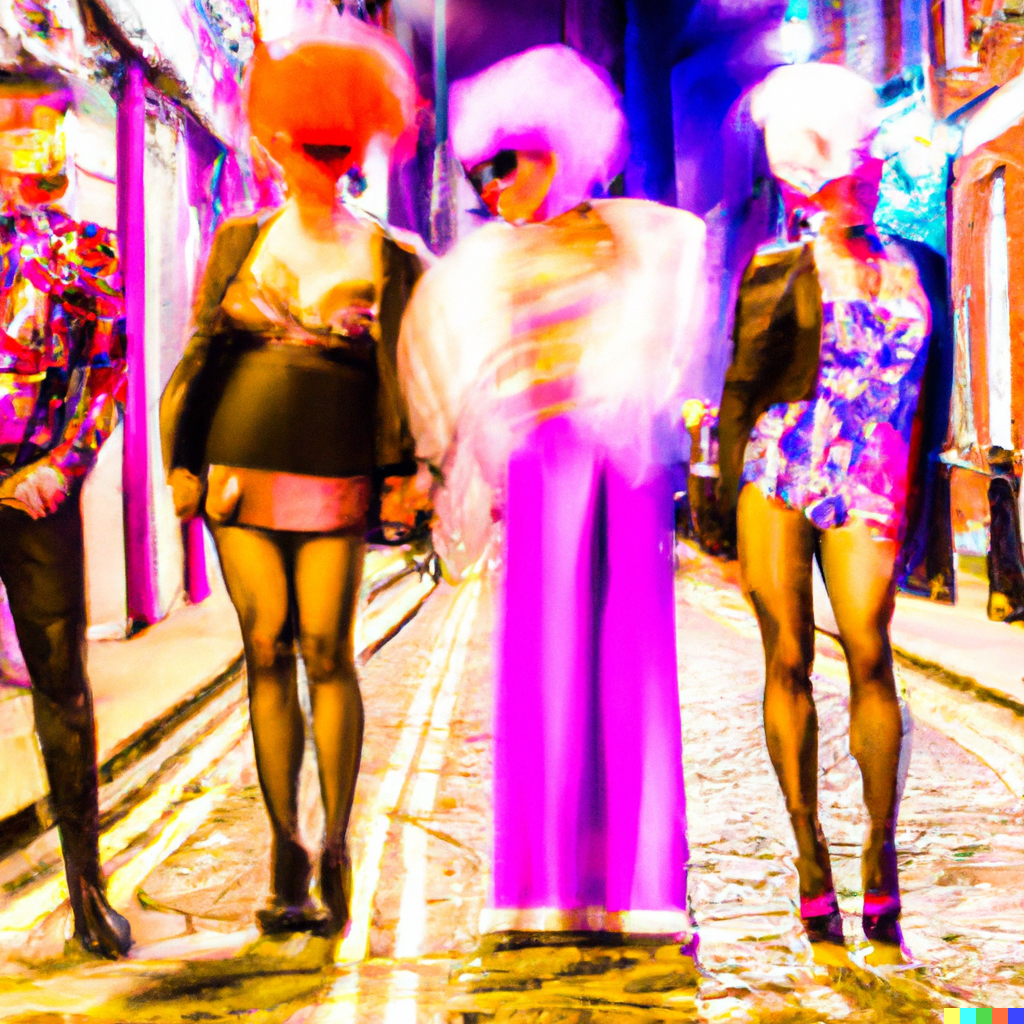
Those drag queens in the pictures are not just putting on a show – they are asserting their power through self-expression. Drag performance is a form of rebellion against the heteronormative patriarchy, a way for queer individuals to say, ‘We will not be silenced.’
Through their exaggerated makeup, flamboyant costumes, and larger-than-life personalities, drag queens create a space where anything is possible. They challenge the rigid gender norms and expectations of mainstream society, creating a world where gender and sexuality are fluid and anything is possible.
But drag is not just about acceptance – it’s about power. Drag queens use their bodies and their art to assert their agency and autonomy in a world that would otherwise seek to erase them. They take the stereotypes and prejudices that have been placed upon them and turn them into something beautiful and empowering.
And this power is not just confined to the stage – it has real-world implications. Drag has been at the forefront of LGBTQ+ activism, from the Stonewall Riots to modern-day fights for equal rights. By creating spaces of inclusivity and acceptance, drag performers inspire others to be proud of their identities and to fight for their own autonomy.
In fact, drag has become a cultural phenomenon, inspiring countless individuals to embrace their own unique forms of self-expression and rebellion. From drag-inspired fashion to music and art, drag has influenced and transformed popular culture in ways that are both profound and far-reaching.
In the end, the power of drag lies in its ability to challenge and subvert dominant power structures. Through self-expression and rebellion, drag performers create a world where anything is possible, a world where queer individuals can celebrate their identities and assert their autonomy. It is a force to be reckoned with, a radical subversion of the status quo that has the power to transform not just the stage, but society as a whole.
‘Drag subverts the idea of fixed identity, which is one of the reasons it is so threatening to traditional culture.’ Camille Paglia
‘Drag queens are some of the most fearless and creative performers out there, using their art to break down barriers and promote social change.’ Germaine Greer
Challenges Of Performing Drag
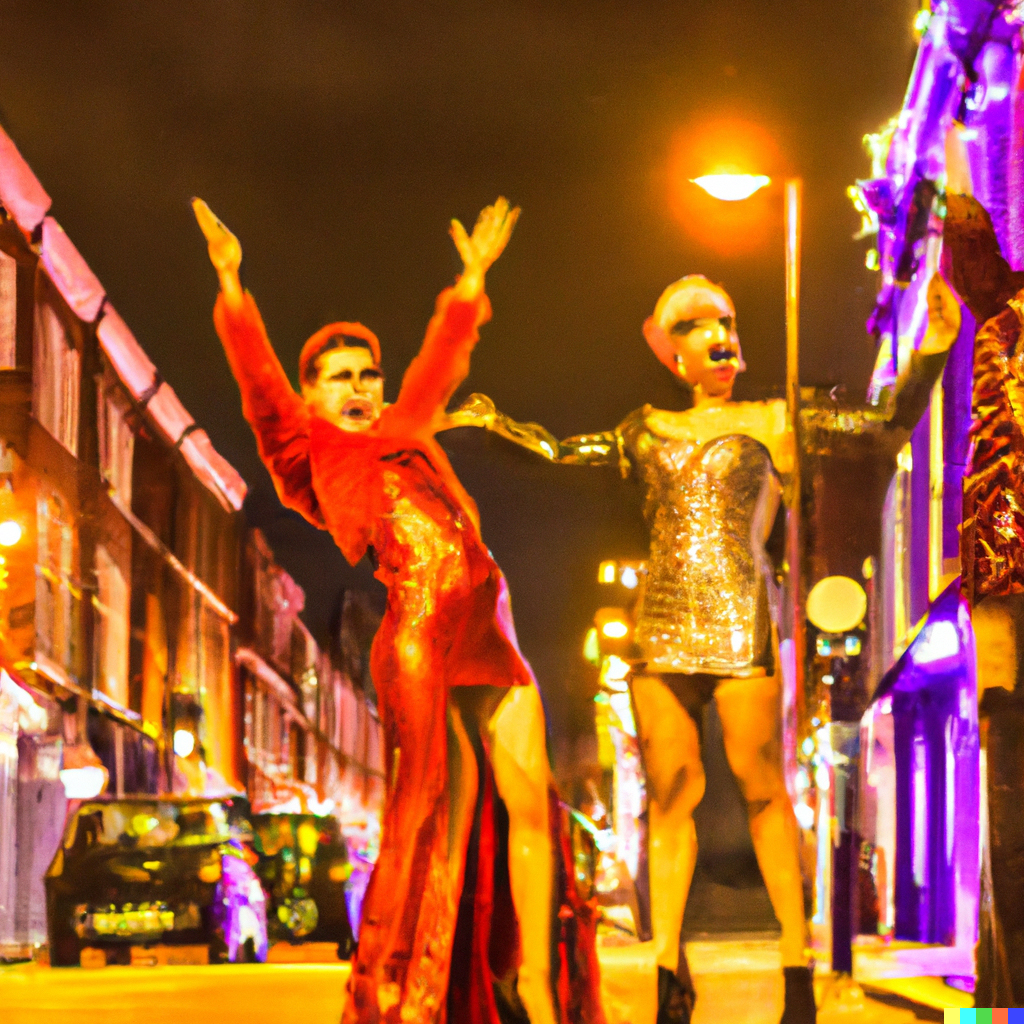
Drag performers face an uphill battle against a society that seeks to put them in a box and strip them of their freedom of expression. The challenges that they face are not just in the form of discrimination and violence but also extend to legal hurdles that they must navigate to simply be themselves in public.
Even in supposedly accepting spaces such as clubs and bars, drag performers are often turned away or subjected to unfair scrutiny. On the streets, they face the constant threat of violence and harassment. These are not just isolated incidents – they are indicative of a society that refuses to accept those who refuse to fit into rigid gender norms.
But drag performers have not let these challenges dampen their spirits. They use their performances as a means of fighting back against discrimination and subverting the expectations that society has placed on them. Through their art, they refuse to be silenced and instead choose to use their platform to speak out against injustice.
To support drag performers in their fight, it is crucial for allies and the community to stand with them. Whether it is through offering safe spaces for expression or speaking out against discrimination and violence, it is important for society to recognize that the fight for drag performers’ rights is a fight for everyone’s rights.
Moreover, drag performance is not just entertainment. It is a political and social statement that calls into question societal norms and expectations. Drag performers have been at the forefront of activism and resistance, using their art to raise awareness about issues facing the LGBTQ+ community and beyond.
The challenges facing drag performers are not going away anytime soon. They must navigate a hostile and discriminatory society, but through their resilience and activism, they continue to carve out spaces of acceptance and self-expression. It is up to all of us to stand with them in this fight for a more equitable and just world.
‘Drag is a way of embodying and performing ideas about gender, and the purpose of drag is to question those ideas.’ Camille Paglia
‘Drag performance is about breaking down the walls of convention and stepping into a world of limitless possibilities.’
Future Of Drag
The future of drag is a complex and multifaceted issue that cannot be reduced to a simple soundbite. While it is true that drag has gained significant mainstream popularity in recent years, some argue that this has led to its commodification and dilution of its subversive power.
Furthermore, drag performers continue to face significant challenges, including discrimination, violence, and legal penalties. The fight for acceptance and equal rights is far from over, and the future of drag depends on the support and recognition of society at large.
Despite these challenges, drag performers have continued to use their platform to promote social and political change. By challenging traditional norms and expectations, drag has become a powerful symbol of inclusivity and acceptance, particularly for the LGBTQ+ community.
However, it is important to recognize that the future of drag also depends on the ability of the community to adapt and evolve. As gender and sexuality become increasingly fluid and non-binary, drag must continue to reflect and celebrate this diversity.
‘The point of drag is to highlight the performative nature of gender and to show that there is no fixed or essential self.’ Camille Paglia
‘In drag, there are no rules, no limits, no boundaries. It’s a space where anything is possible and everything is up for grabs.’ Germaine Greer